After four months and over 10,000km’s in Indonesia, we were crossing in to a new country. Woo Hoo! After a relatively simple border crossing, immigration processed out and in, Carnet de Passage stamped out and in and car permit and insurance in hand we were on our way. That we had entered a new country was immediately noticeable. Road conditions improved greatly. Houses were larger, on larger lots and seemed to be better cared for. The land appeared to be either palm plantation or forest. The wasted landscapes of Central Kalimantan were not to be seen. Cars were parked in the front of most houses in contrast to the normal motorcycle in Indonesia. The traffic was suddenly much quieter, polite and seemed to adhere to road rules. One vehicle per lane, trucks loaded within GVM (looked like half loads after Indonesia!), all vehicles with full sets of lights and indicators used, give way to traffic on the right, roundabouts using the give way to the right ruling rather than flowing into the gaps and a general level of etiquette. I will need to reteach myself to drive!
The road to Kuching was four lanes all the way, making cruising speed a comfortable 90km/hr. Wow this is relaxed! We arrived into Kuching, filling up with fuel on the outskirts at a self serve service station (only full service in Indonesia) and got our new SIM cards organized, before heading into the city centre where we had read about a great spot to camp at Taman Perpaduan, a massive park dedicated to social harmony bang in the middle of Kuching. Great spot and although busy with afternoon walkers and runners, we set up and cooked a home cooked meal.
We had two nights in Kuching and really enjoyed the city. It had a great feel to it with plenty of old colonial buildings, lots of parkland, little alleyways in the city centre and all that a normal modern city would have. We ate in the Chinatown section a few times, ate some great food and had a few drinks at one of the cool bars in the strip.


We noticed immediately the lovely mix and integration of ethnic groups. While the original people are Dayak and Malay, through over a 1000 years of trade with China and SEA and large numbers of Chinese and Indians migrating for work over the past 200 years, there was a real mix of people on the street. Unlike we have seen in other countries, all of the ethnic groups seemed to mix together and the food shared amongst all. It was normal to see Chinese and Malay’s eating a Roti Chennai for breakfast at an Indian Restaurants, Chinese and Malay’s working in the restaurants and vice versa with the different businesses and restaurants. The shops often proudly showed Chinese script below the Malay signage out the front, but it all seemed quite harmonious.
Having been on the run for a bit, we had a relaxed start to Kuching, spending the morning in the park, reading, getting the blog updated and a bit of research done on our next 10 days in Sarawak, Sabah and Brunei.
We started with a brief look at the Natural History Museum, the stately Museum Sarawak and then spent most of the rest of the day at the incredible Borneo Cultures Museum. What a facility, matching the best museums I have ever been to with a great mix of exhibits, personal stories, background historical information, videos and heaps of interaction. Clever, informative, current world and all decked out in a beautiful building. Was a great way to start our time in Sarawak.

Sarawak has a really interesting history. It was ruled under the Sumatran centred Srivijaya Empire until the mid 13th century and during this time had active trade with China. With the Sumatran Java war in 1225 and seemingly a lack of resources and focus to maintain, the Sarawak region came under the control of the Bruneian Sultanate. In what I think is a complete quirk in history, in 1839 with internal war throughout the region, the Sultan enlisted the help of a British sailor James Brooke. James Brooke had served in the British military previously and with a handsome inheritance purchased a large vessel and was sailing the region looking for opportunity. James Brooke was able to negotiate with the agitators and quell the rebellion after which he was rewarded with the territory around Kuching. He became known as the ‘White Rajah’ and he and has family ruled and expanded the region for more than 100 years until the Japanese invasion in 1942. It seems unthinkable that a random British adventurer (Susi refers to him as a backpacker) was able to assume control of a foreign land, expand the area to what is now the state of Sarawak and run it as his own fiefdom. Following the end of WWII, a later generation of Brooke asked for the British Government to assume control and following a bitter campaign, Sarawak became a British Colony and then was combined with Malaysia in their independence movement in 1963. You can see openly that the people are extremely patriotic to their state with flags often mounted on cars, sometimes with the Malaysian flag along side.
With a bit of background on the state we then set about exploring. We started with Bako National Park, an isolated national park close to Kuching that requires a boat to access (it is pretty steep terrain). After a 20 minute boat road we set about exploring some of the tracks, enjoying the rainforest fresh air. The ultimate goal was to site a Proboscis Monkey and that we did. We had befriended the guide of another group (he seemed more interested in us than his own group) and was able to guide us to where a lone monkey was coming in to feed. While we only got a fleeting view, it was great to see one in the wild.


Following a quick boat ride back to the port, we then drove down to the Semonggah Wildlife Centre, a fantastic 1600 acre orangutan sanctuary. The forest has been preserved since the 1920’s and in 1975 an orangutan sanctuary was established for illegally kept orangutans with the aim of rehabilitating them to live in their natural environment. The orangutans are now breeding and they have 29 in the park, mostly living from the environment, with some supplementary feeding in the dry months. When we were there only 4 of the 29 came, so most are able to live a completely natural life. They are such beautiful animals, mostly completely chilled out, some cheeky, some nurturing, some protective, all seemingly individuals with their own character. Seemed such a well run facility that will evolve in the future with the introduction of genetics from other centres and with the sanctuary given legislated protection, will be there for the infinite future.


With a packed in day we then headed for Sireh Cave, a site south of Kuching where there were to be some prehistoric charcoal paintings in the opening of the cave. We found the village nearby and after chatting to some locals and given permission, camped in the carpark where we cooked a fantastic snapper fish curry.
Next morning, up early we headed to where we thought the cave was, found some local farmers and were informed we were in the wrong spot. Their son guided us to the entry point on his motorbike about 1km away. In we went. No paths, long grass, found the plaque, a bridge and then looked up to a completely rotten wooden stairwell. Looks like there haven’t been visitors for many years. Oh well, not this time!


Time to start our journey eastwards towards Brunei. Following the great roads of Sarawak, we made it close to the border, camping on the beach for the night. Great spot.

An early start, we headed into Brunei. I may have had too higher expectations for Brunei. While the Sultan is extremely rich (worth USD30 Billion with a USD 4 Billion dollar car collection – the largest private collection in the world), the country is not. It is solely reliant on one income source – oil. The country is basically unproductive and speaking to a local shop keeper, the only production in country is chickens and eggs, the rest imported. Business is predominantly operated by Chinese and Indian owners and the locals mainly work in government roles. The population is well educated, but there are limited work opportunities and high unemployment. The city is not pretty. I would have thought with one person in control and one vision that it would be a jewel of a city, but it was grubby and boring, the only highlights the mosques and the sultans palaces – there are four! That it was so hot may have also altered my view to the place – 35 degrees, feels like 42 degrees….and it was humid. We spent an afternoon looking about, but we weren’t inspired to seek out more. The people were super friendly once you opened conversation, but they seemed quite reserved, even cautious. Alcohol and tobacco are completely banned. If you are caught smoking it is an immediate $300 fine and if caught with alcohol it can be a fine, prison or a public flogging! We had a lovely evening at the Gadong Night Markets with fellow travelers Maria and Rodney and then early the next morning we got on our way. We had a short amount of time for the region and didn’t see too much value in staying longer in Brunei.


We exited out the eastern side of Brunei and crossed the incredible Sultan Haji Omar ‘Ali Saifuddien Bridge, crossing 26.3km across Brunei Bay taking you to the eastern border crossing into Sarawak. What a piece of engineering!

With another simple crossing we continued our eastern direction, crossing the border point into Sabah (there was a passport control centre between the states) and taking the route through the mountains made it as far as Rumbio Trusmadi, camping on the side of a river enjoying a cooling swim on arrival. It is still hot!

Another early start, we made it to the east coast city of Sandakan, site of the WWII Australian and British POW camp and a number of wildlife sanctuaries. We arrived midday at the Sandakan Memorial, a sombre facility to remember the losses of Australian and British Servicemen imprisoned from 1942 till the end of WWII in 1945. The POW’s were tasked with the construction of a new airfield and were housed at the site of the memorial. While at the start of their imprisonment they had sufficient food, the beatings were persistent and as the war progressed and particularly when the tide of the war changed against the Japanese, the conditions dropped markedly and the losses started to accelerate. In the final stages of the war, the remaining prisoners were put on a march to Rinau, over 200 kilometres to the north west. Most were malnourished and in poor physical health and the march (now referred to as a death march) claimed every single life except 6 prisoners who escaped or who collapsed and were left for dead and then survived. The only survivors of the Sandakan POW camp were these 6 and any other prisoner who had been transferred earlier. There were approximately 1800 Australian prisoners and 600 British prisoners in all. Not a single British prisoner survived. Following the war, 8 Japanese soldiers were charged with war crimes and were executed. As in Nazi Germany, this portion of the war created monsters also. It was cultural within the Japanese army with a strict hierarchy and beatings given out to their own soldiers and the worst of the Australian abusers being the bottom of the hierarchy. They beat the only people below them – the POW’s. The Sandakan story seems to be under acknowledged in Australian War History. I expect this is mostly due to the lack of survivors and as most didn’t return, the story was not told. Sombre experience.

From the Memorial we explored Sandakan City, a waterfront city, a bit run down, a bit smelly, but a bustling spot.

For a lighter experience, the following day we visited the Sun Bear Conservation Centre in Sepilok and the Labuk Bay Proboscis Monkey Sanctuary. The Sun Bear Conservation Centre rescues Sun Bears that have been bought as pets or when they find out one is for sale in a market. Sun Bears are super cute as babies, but grow into aggressive bears. Though small in stature, they have massive claws and strong jaws housing big teeth – not the ideal pet as most find out! To get the baby Sun Bears, normally the mother has to be killed as she is protective and will fight to keep her child. The bears being sold at the markets are either for the pet trade or for meat, with the gall bladder used in traditional medicine. While illegal to sell Sun Bears in Malaysia, the profits warrant the risk for some. As the young Sun Bears are brought up in peoples homes, they lack the skills to seek out food and to protect themselves. The sanctuary aims to teach these skills with the ultimate aim to release the animals back in to the wild, which they undertake regularly with varying levels of success. It seemed a passionately run sanctuary that did seem to be making a difference.


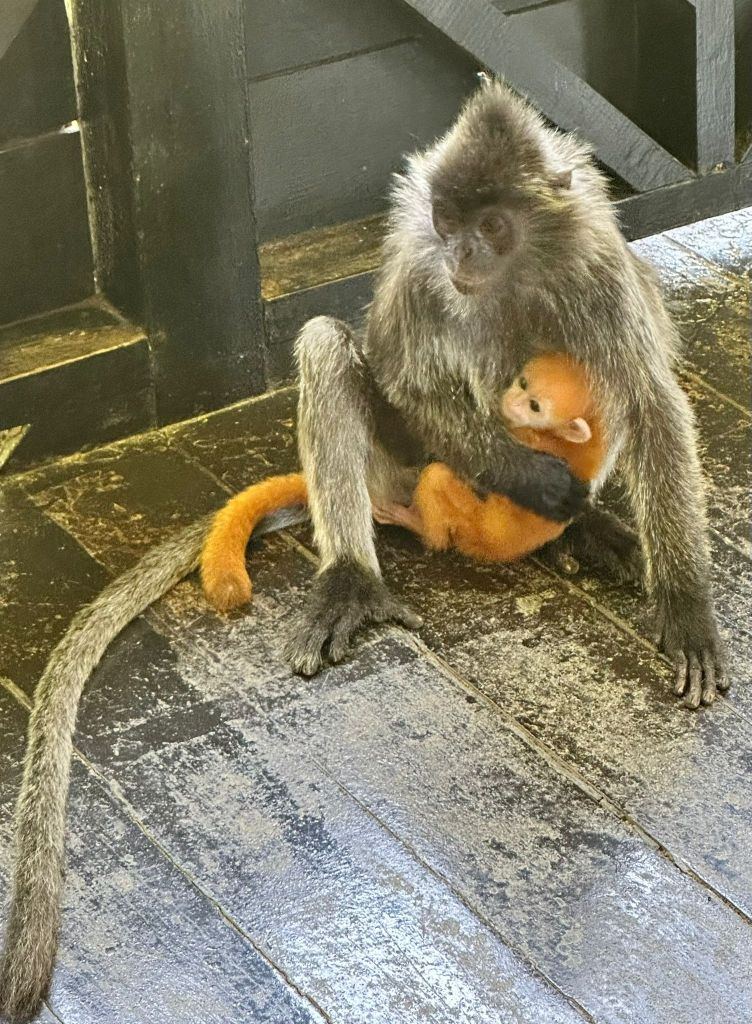
Following the Sun Bear Conservation Centre we headed to the Proboscis Monkey Sanctuary. This facility sits on 400 acres in the middle of Palm Plantation. The owner apparently was about to clear the forest to make way for more plantation when he found out there were resident Proboscis Monkeys. He made the decision to preserve the area and now there is a community of monkeys living in the area. They supplementary feed a few times a day, I think mainly to bring them in so people could see them. Great to see the animals up close and how they interact, but didn’t have the same preservation/protect feel of the other places we visited.



With our time now running short, we headed up to the Mount Kinabalu area, stopping in at a perfect campsite overlooking the mountain. We caught the last of the sunset over the mountain and then saw its features gradually appear through the next morning.


One last night before heading in to Kota Kinabula, we camped at Dragon Pearl Beach enjoying our last night camping in Betty for a couple of weeks.
Car cleaned, clothes laundered, moisture absorbers purchased we headed in to Kota Kinabalu where we loaded Betty in to a container the following day. She ships on the 2nd of September and hopefully we have her cleared from Customs on the 15th.
With a couple of days in Kota Kinabalu before flying out, we have had a lovely time exploring the amazing food night markets, finding a very cool ‘speak easy’ bar, watching the Independence Day celebrations and wandering the streets taking in the city sites.


We had a great time in Sarawak, Brunei and Sabah. There was plenty to see, lovely roads (a few crap ones towards Sandakan), great camping, friendly people and Roti Chennai!
Leave a Reply